
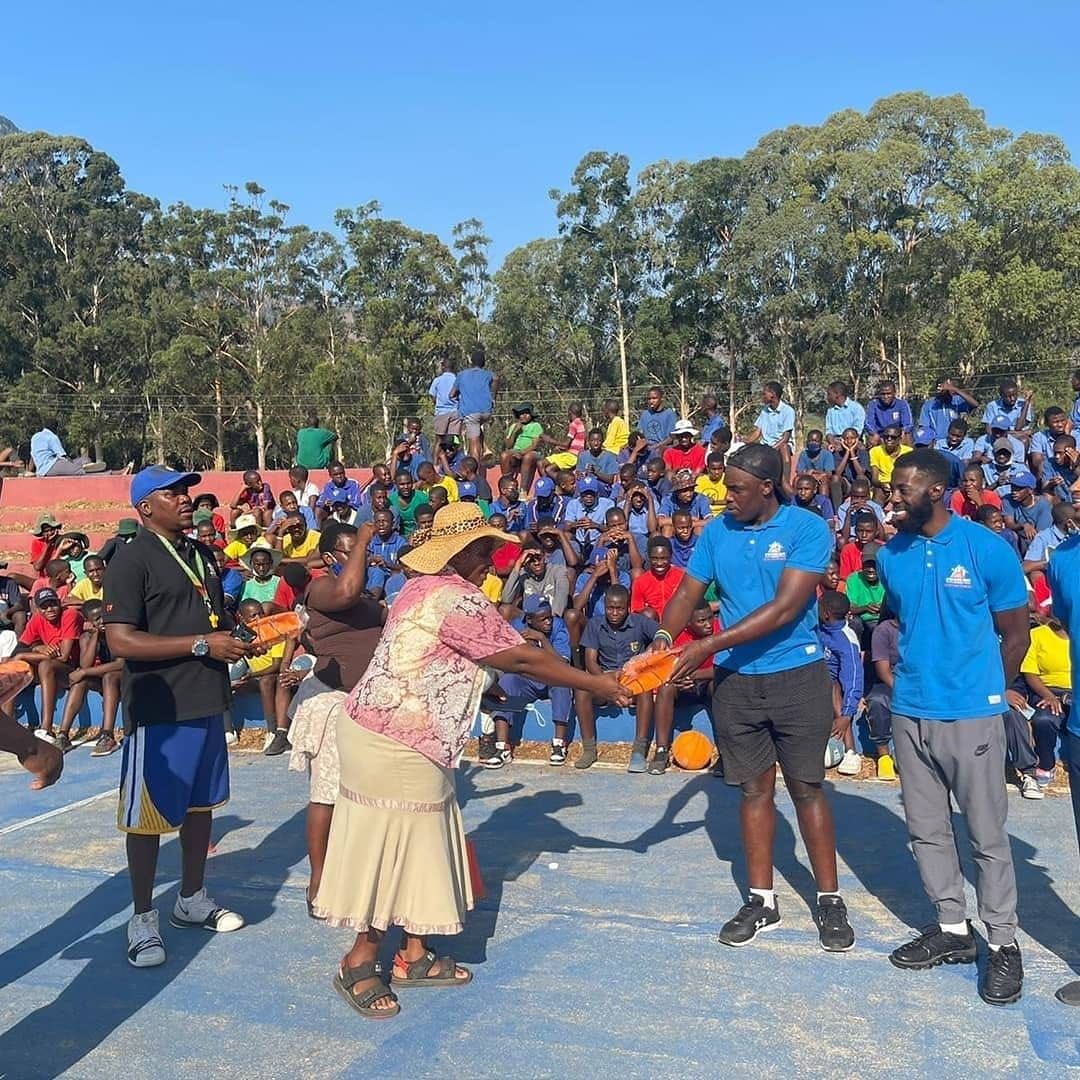
A little while back, I had an incredibly insightful conversation with David Mlambo, founder of After School Hoops. After Schools Hoops operates a program in 650 schools, benefiting 7,500 to 10,000 children annually, that aims to strengthen communities in Manicaland and Mutare through basketball.
The catalyst for the organization’s founding came ten years ago when five of Mlambo’s school friends suddenly died of drug abuse on the same day. Through basketball’s community building power, the program seeks to prevent kids from falling prey to violence, drug abuse, and early child marriage, as 34% of girls in Zimbabwe are married before the age of 18.
In our conversation we explore the purpose of After School Hoops, Mlambo’s passion for ministering through basketball, as well as the unique local and international relationships fostered by his program.
Making Sense of Tragedy Through Basketball
Basketball had always played an important role in Mlambo’s life. When he was kid, he fell in love with the sport watching Kobe Bryant, emulating his moves while playing at school. However, basketball wasn’t just a passion for Mlambo; it ultimately turned out to be an outlet that saved his life from the negative influences around him.
“When I was growing up, I had eight friends —five of them that were into drugs. The school I used to go to would finish at 3:00 o’clock. From 3:00 to 4:00, we had basketball practice —so I had fewer times with them.”
On a fateful afternoon, Mlambo came home from school when X delivered him the tragic news.
“I got home […] said “most of your friends like five of them, they passed away.”
Mlambo was in disbelief, “But I was with them yesterday?” X said “No, they overdosed on drugs.” “No but I played with them, they never told me they do drugs.”
The news deeply disturbed Mlambo, and it compelled him to do something about the realities prevalent in his communities.
“It was a shock to me, and I felt like if I don’t do something in my community —and communities around me— that drug problem is still going to be an issue. So we try to do ‘basketball against drugs,’ ‘soccer against drugs.’ We just keep trying to put the word out there so the kids don’t want to indulge in those things.”
Historical and socioeconomic troubles
In Zimbabwe, grinding poverty and shrinking opportunities are issues that persist today —and are in large part rooted in decades of political mismanagement.
In 1980, Zimbabwe (formerly Rhodesia) was officially granted independence by the United Kingdom after enduring years of strife marked by tensions between minority white administrations and majority black insurgencies. During the mid-1990s, the nation experienced a period of economic prosperity, with thriving independent agricultural and industrial sectors leveraging a well-educated workforce, transforming Zimbabwe into a net exporter to both regional and global markets. Unfortunately, by the late 1990s, the country’s economic decline began due to governmental mismanagement and corruption under Robert Mugabe’s rule, leading Zimbabwe to accumulate significant debt and heavily depend on humanitarian aid.
“The biggest challenge in Zimbabwe at the moment is poverty,” Mlambo says. “The kids are not exposed to more and newer things in life —it’s just the same stuff day and night. What we’re trying to do as a program is we try to have it? that through sport and ministering to the kids –mostly in girl child[ren] because you find most of the girls are getting married in the early stage.”
As a way to help children avoid violence, crime, and drug abuse, Mlambo started After School Hoops, a program operating in 650 schools, benefiting 7,500 to 10,000 boys and girls. After School Hoops creates a safe space for youth to stay after school and improve their basketball. Throughout the clinics, Mlambo likes to preach three specific values: focus, integrity, and persistence.
“We teach the kids to be focused on whatever they want to do. They need to be focused on it for them to make it to the next stage. In terms of integrity, they have to be honest to themselves and people around them, and they have to do things without being told at the right time. If someone wants to be a doctor, you have to persist and persevere towards that dream. There’s no one who’s going to take you and put you up to where you want to be.”
Mlambo’s Instagram page features videos that display the palpable excitement of the boys and girls participating in the clinics despite the suboptimal playing conditions.
“We sometimes go to schools with no actual surface, but you’ll have 600 kids on the court that want to play on that mud ground. It shows it’s pretty much growing faster than we thought. You go to another area, you find 300 kids on the same surface with makeshift hoops, but what they want is just to play basketball.”
Mlambo is also transparent about his faith and his desire to bring about positive change by ministering through sport: “He’s been serving my life when I didn’t know it by keeping me playing basketball while my friends were busy doing drugs. So that’s why I feel like if we can minister through sport, it’ll bring more kids to Christ and also build better community role models with good footsteps.”
Furthermore, Mlambo and his wife have also started an all-girls camp that helps girls participate in sporting activities, like netball or soccer, while helping them reach their academic goals. The purpose of that program is to help prevent child marriage in his community, which tend to be driven by gender inequality, poverty, and low levels of education among other factors.
According to figures published by the nonprofit Girls Not Brides, 34% of girls in Zimbabwe are married before the age of 18.
Looking Ahead
Perhaps the most awesome thing about After School Hoops is the way that it’s a catalyst for building relationships at a local and international level. The organization has been the beneficiary of sports equipment sent by Pluto Academy, a youth basketball club based in Colorado Springs. He also mentions Brad McCoy as an individual who conducted shoe drives and donated T-shirts for Mlambo’s program.
Through these selfless donations, Mlambo tries to build a bond between the kids in Africa and the kids outside the continent by having the beneficiaries of the shoes write back to the children in the US who donated them.
Mlambo is cautiously hopeful that the rise of formalized basketball competition —notably the BAL (Basketball Africa League) — will spur the development of grassroots basketball throughout the continent, not just in the countries where the NBA has a corporate presence.
“That help never gets to us here in Zimbabwe — it ends up there in Rwanda and Ghana and the Nigeria, it never gets to Zimbabwe and other countries. So we are happy for those guys in the other side of the countries so they can grow up the development of the basketball and also keep motoring the game in those areas.”
After School Hoops has helped improve the lives of thousands of kids in Zimbabwe in some capacity. It is only fitting, that reinforcing relationships with the youth in his community through basketball has been his biggest blessing.
“Building the relationships with the kids and the coaches and then the community has also changed my life […] we can interact more than like a family. You can know the kids — ‘Ok, they’re struggling with what? Maybe they didn’t eat.’ Then you get to know the kids more than basketball.”
Contact David Mlambo at afterschoolzimbabwe@gmail.com
Instagram: https://www.instagram.com/after_school_hoops_zimbabwe_mp/
 Elixir Sports